jan
Menlo Research · Product Designer
Jan is an open-source app that runs AI models on your own computer. Since launching in January 2024, it has been downloaded more than 7 million times and earned over 46,000 stars on GitHub. I designed for two kinds of people at once: technical users who want every setting, and newcomers who just want a private alternative to ChatGPT.
The brief
Simple for anyone, powerful for nerds
The reality
A product that kept changing direction
Most of Jan’s users are technical, and its active Discord requests features, tests new builds and says exactly what isn’t working. A growing number of newcomers, though, just wanted private AI that works. Built by engineers for people like them, Jan served the first group well and overwhelmed the second.
The revamp started with a senior designer, who set up projects, chats and a first design system before moving on a few months in. I took over and led it from there, from onboarding to settings and themes, all around one rule: simple by default, powerful when you ask for it. Jan ran on a small team and its direction kept shifting, so much of this work was designed rather than shipped.
Throughout, we also explored past the roadmap, into ideas the team found compelling but couldn’t prioritise yet, and later came back to finish the design system and shape Jan’s next big feature.
Getting to the first answer
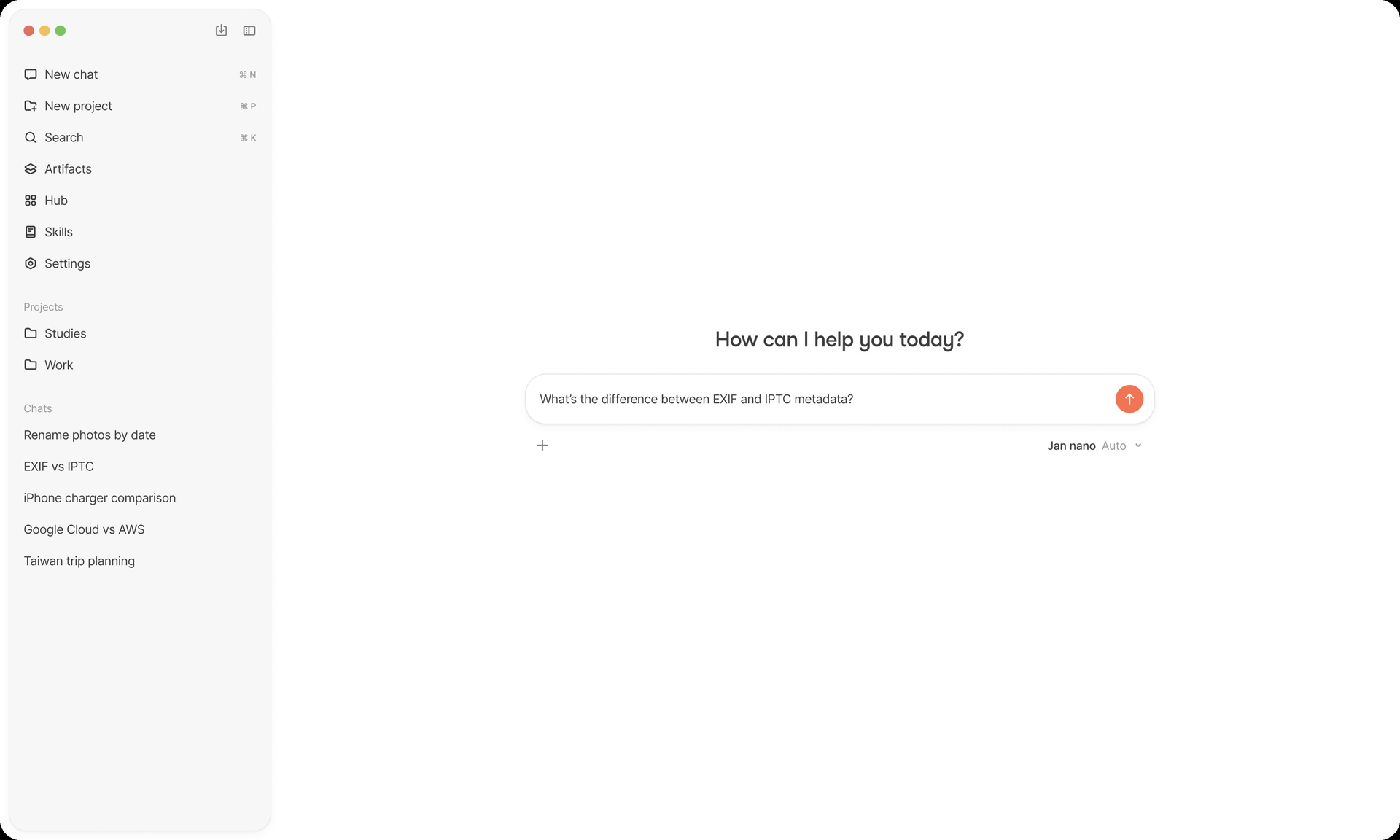
Cloud AI works as soon as you sign in. Local AI needs a model first, which means choosing between names most people have never heard of and waiting for a download of several gigabytes. In my onboarding, Jan checks the computer and recommends one model that will run well on it, so getting started is one click. While it downloads, people pick a theme and watch Jan change colour around them. Those accent colours shipped and are still in Jan today, including a pink built on a colour called Mimi Pink, #FFDAE9.
Settings that don’t scare people off
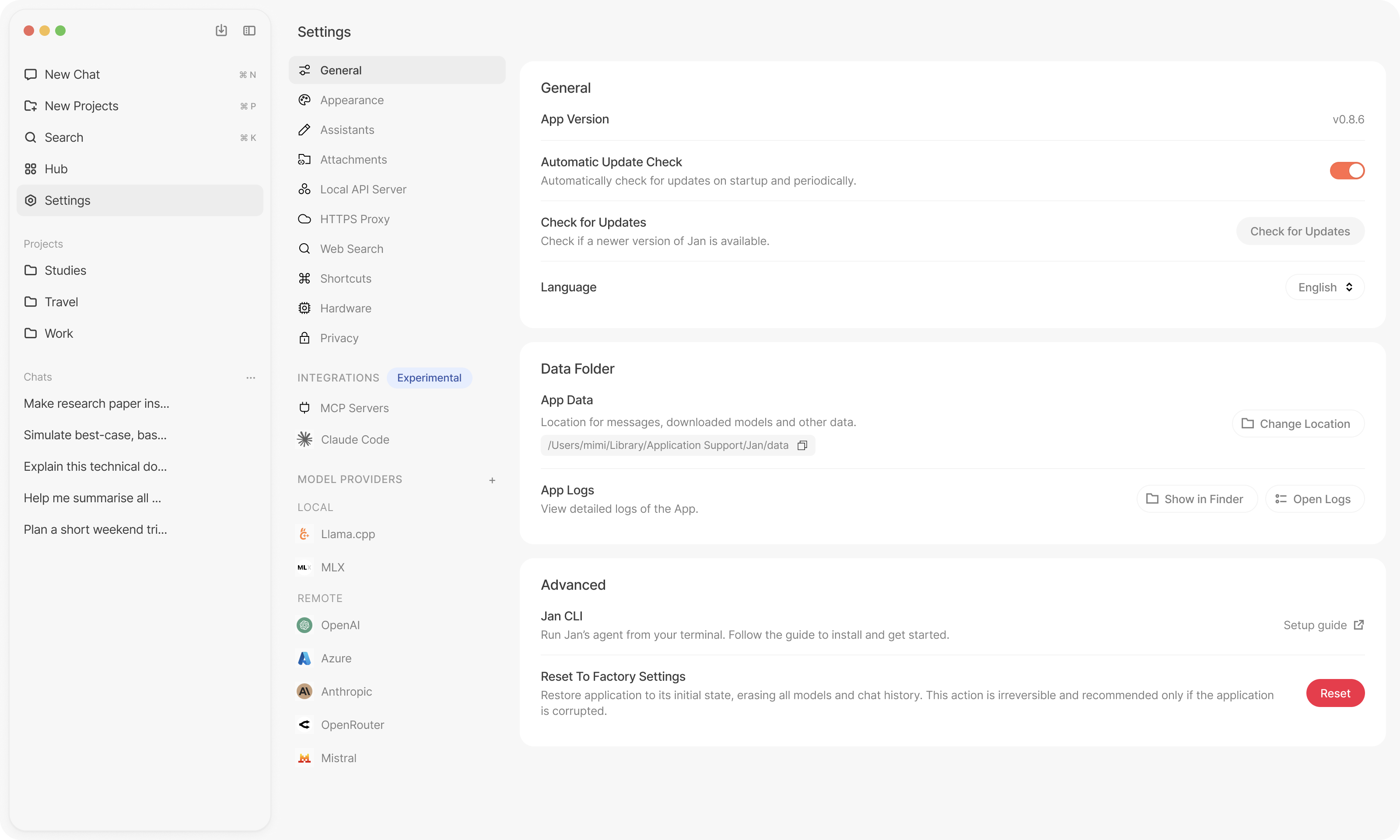
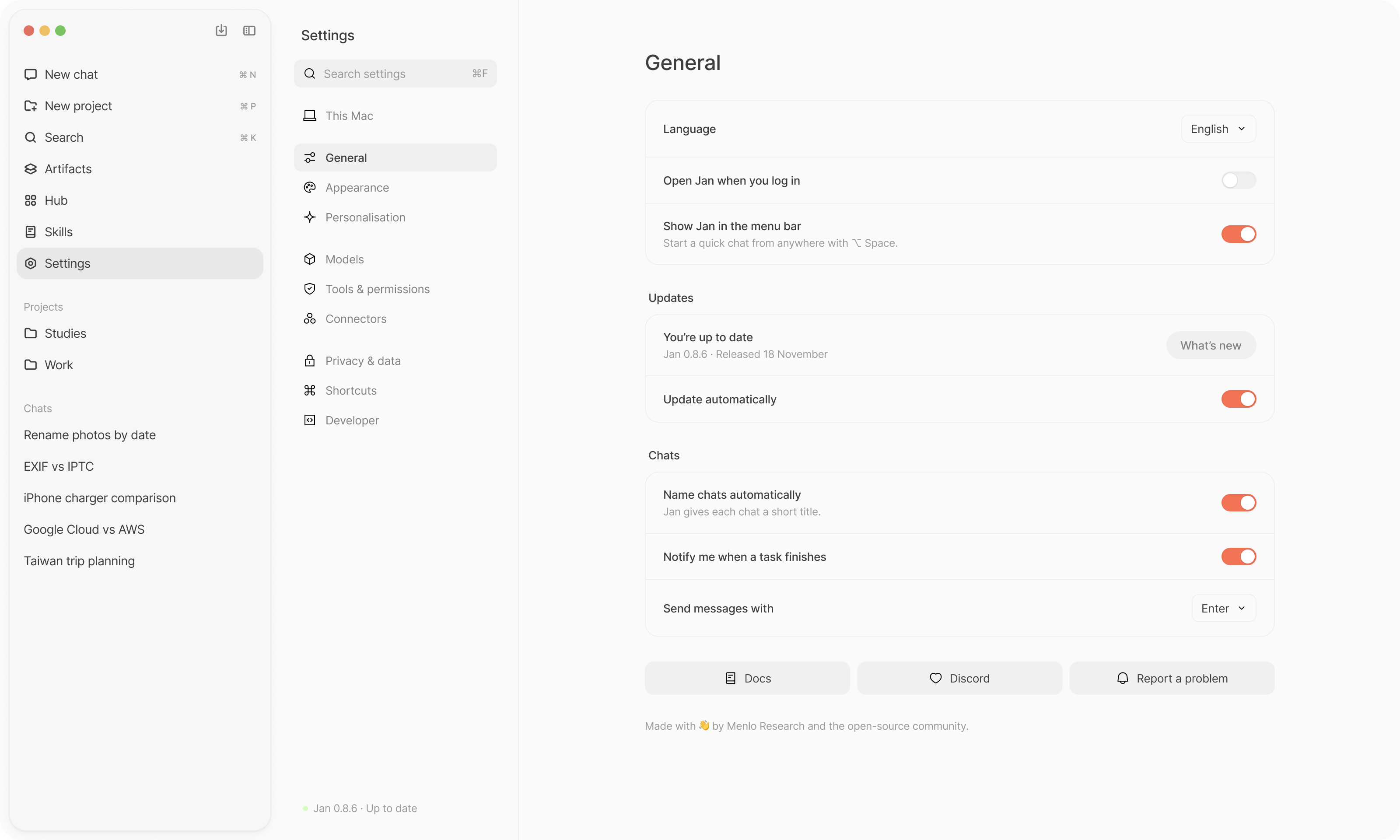
The menu listed every model provider next to the engine running local models, and the attachments page asked people to set chunk sizes and similarity thresholds. I reorganised the settings around what users actually come to change: everyday options up front in plain language, technical ones a click deeper, and a hardware page that shows which local models their device can handle, since a model that’s too big for it simply won’t run. The menu went from 19 entries to ten.
Designing ahead of the roadmap
Part of our job was to provoke the roadmap, or explore beyond it, into spaces Jan could grow. Jan Hub was one: a single place to get models and skills, in plain language, where there had been a raw list of Hugging Face files. Seasonal themes were another.
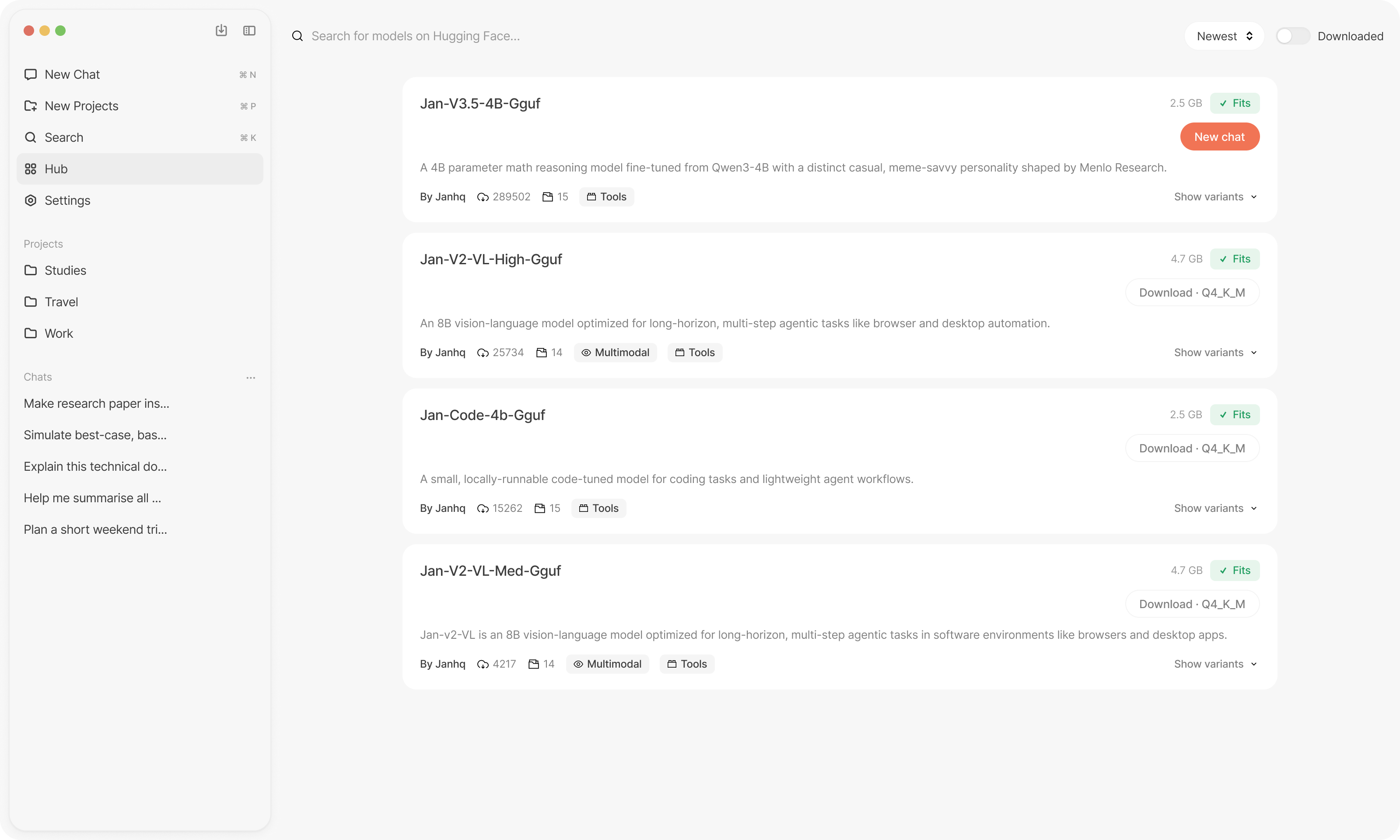
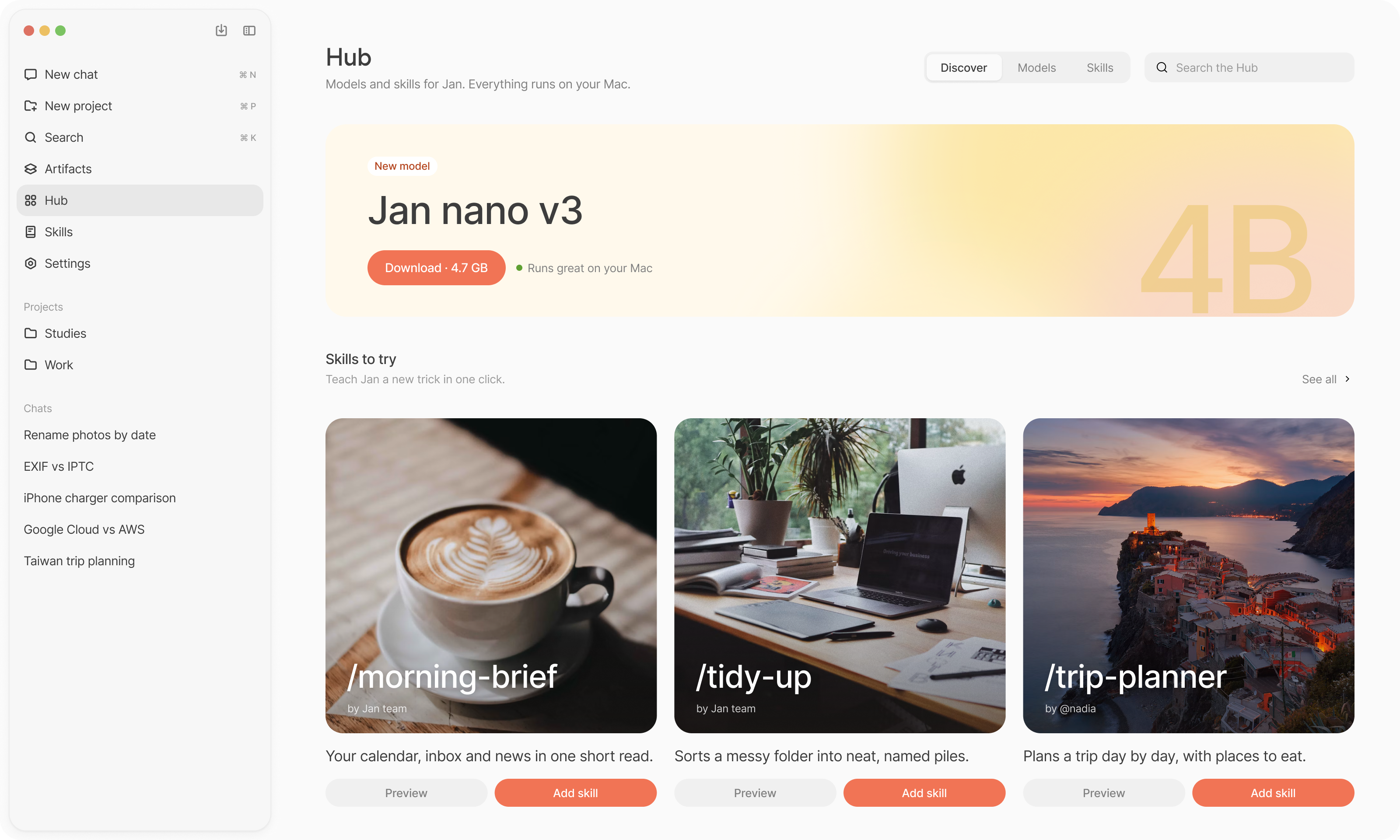
Jan Hub, where people would get models, skills and seasonal themes.
A Halloween theme, one of the seasonal themes. 🎃
And one for Christmas! 🎄
Finishing the design system in two days
The design system was half built when Jan paused. When the project picked back up, I finished it in a day or two, work that used to take weeks. I made the system decisions, tidying the foundations, defining dark mode and specifying the missing components, and handed the repetitive build-out to Claude Code. It’s documented for engineers and their coding agents alike.
Chat and Cowork in one conversation
When Jan picked back up, the next big feature on the table was Cowork: letting Jan work on files and produce documents, code and other artefacts. The decision that shaped everything else was whether it lived in a separate mode or inside the same conversation.
I framed it around real scenarios, from a quick question to a multi-step task across a folder of files. Then I used Claude Code to prototype every path for both options from the design system in a day, so the team could compare real flows instead of debating diagrams.
We benchmarked how the leading AI apps handle the same choice. Claude’s artefacts and ChatGPT’s canvas open inside the conversation once an answer outgrows a message, and the model decides when. Agentic work arrived the other way, as a mode picked before starting, with ChatGPT’s agent mode and Claude’s Cowork tab among them. Then Anthropic folded Cowork into Claude’s chat, the strongest signal of where the category was heading.
It matched what we saw in how people use these apps. Sometimes people know from the start that they need something made; other times a task grows out of a quick question halfway through a chat. A separate mode serves the first case and makes the second start over. We chose one conversation where Jan picks the format: a short answer for a question, and a document, code or a finished file when the task needs one.
Designing in the open
To this day, Jan remains open source, with a global community of contributors behind it.
Next: side quests