menlo research
Menlo Research · Brand & Communications Lead
Menlo Research is a Singapore lab building humanoid robots and open-source AI, moving fast enough that something new goes out almost every week. This is a look at some of the pieces that make up its brand.
The brief
Make a fast-moving lab look like one company
The reality
Speed is the point, and also the problem
When I joined, Menlo was a company of engineers and researchers, and brand, design and marketing were thin on the ground. Anything external-facing was made at the last minute by whoever was free, so every launch, deck and web page looked like it came from a slightly different company. Investors, partners and customers got a different first impression every time, and the rough edges made Menlo look less credible than its engineering deserved.
The fix started with foundations, built for how Menlo actually works. The team is AI-native and works at the frontier, so they don’t need traditional static brand guidelines. They need reusable components and tokens they can pull into whatever interface or asset they’re building. The websites, decks, press kit, shop and thirty-odd livestream episodes now all run on that system.
I lead brand and communications for Menlo and its four products. Beyond the system, I shape how Menlo shows up in the world, from the websites, investor decks and press kit to the weekly livestream and the art direction of the office in Ho Chi Minh City. With a team this heavily weighted towards engineering, and just one other designer and one marketer, a big part of my job is pushing for simplicity and polish, because investors, partners and customers judge a company on how it shows up long before they see its engineering.
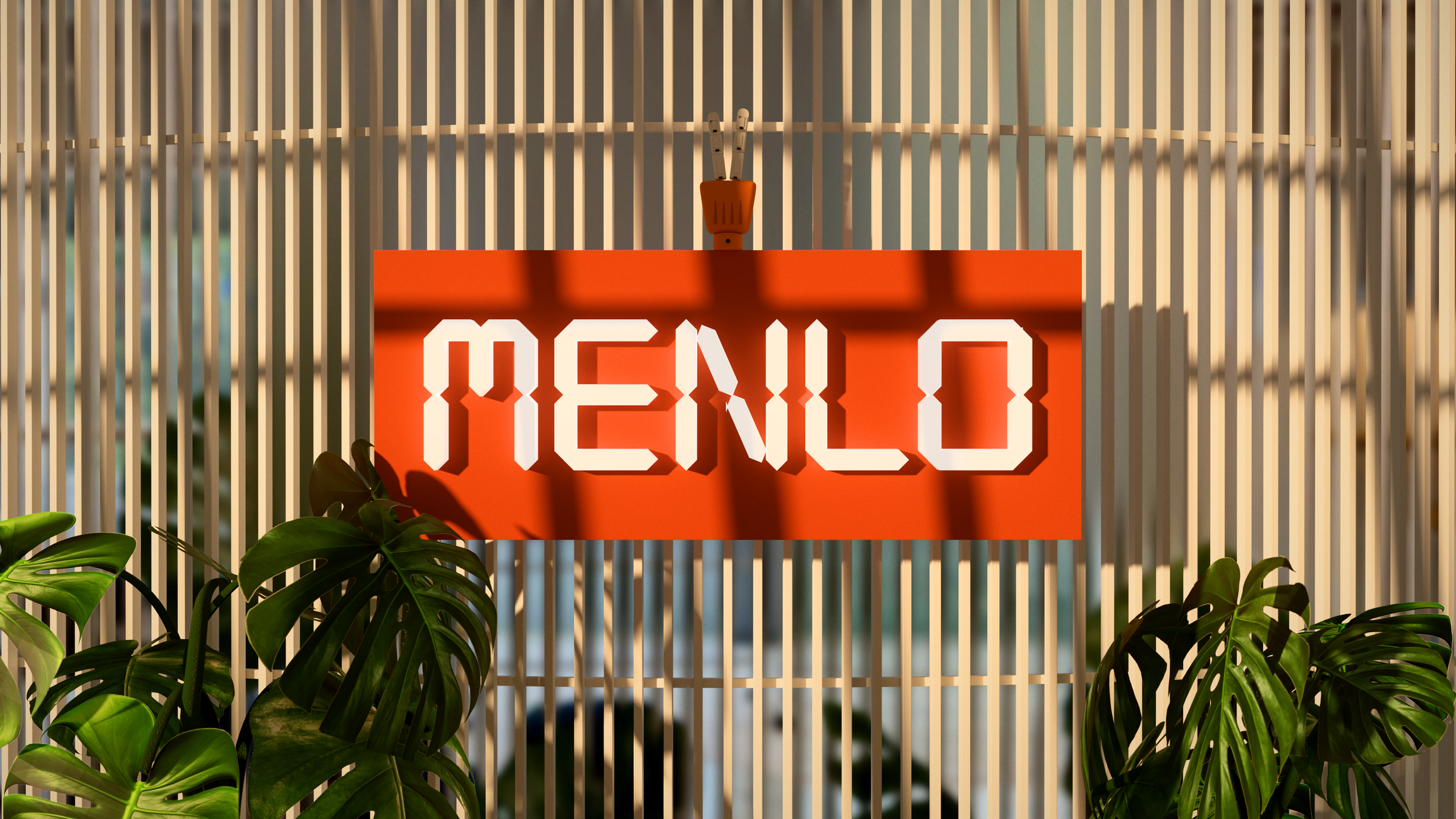
Keep the garage energy, lose the rough edges
The lore helps. Menlo’s first lab is in Sim Lim Square, Singapore’s oldest electronics mall, between family shops selling cables and soldering kits. That garage energy is the brand: nerdy, playful, a bit retro, and stubbornly optimistic about robots. My job was to make Menlo look like a billion-dollar company without losing any of that DNA.
One Asimov story, cut for every audience
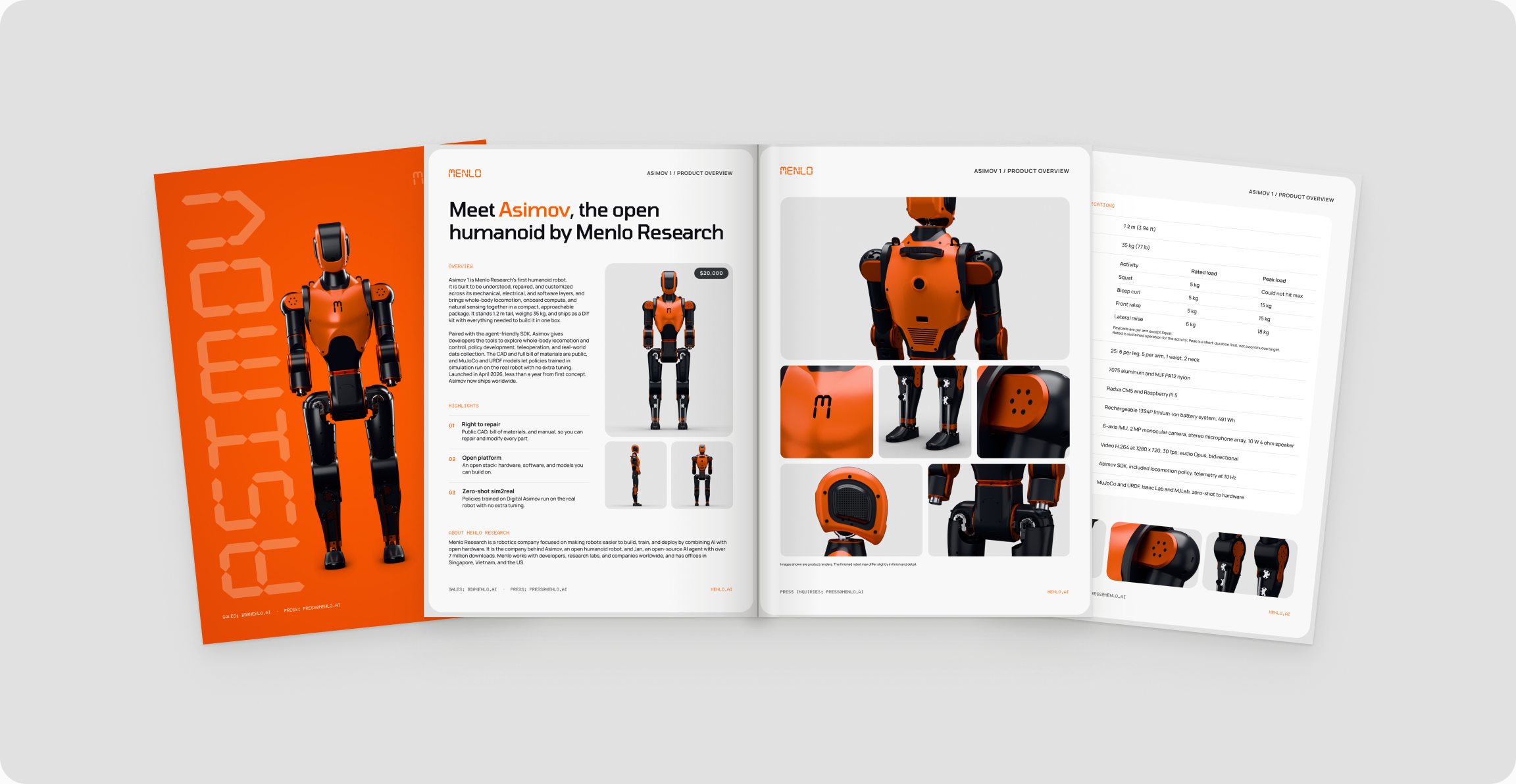
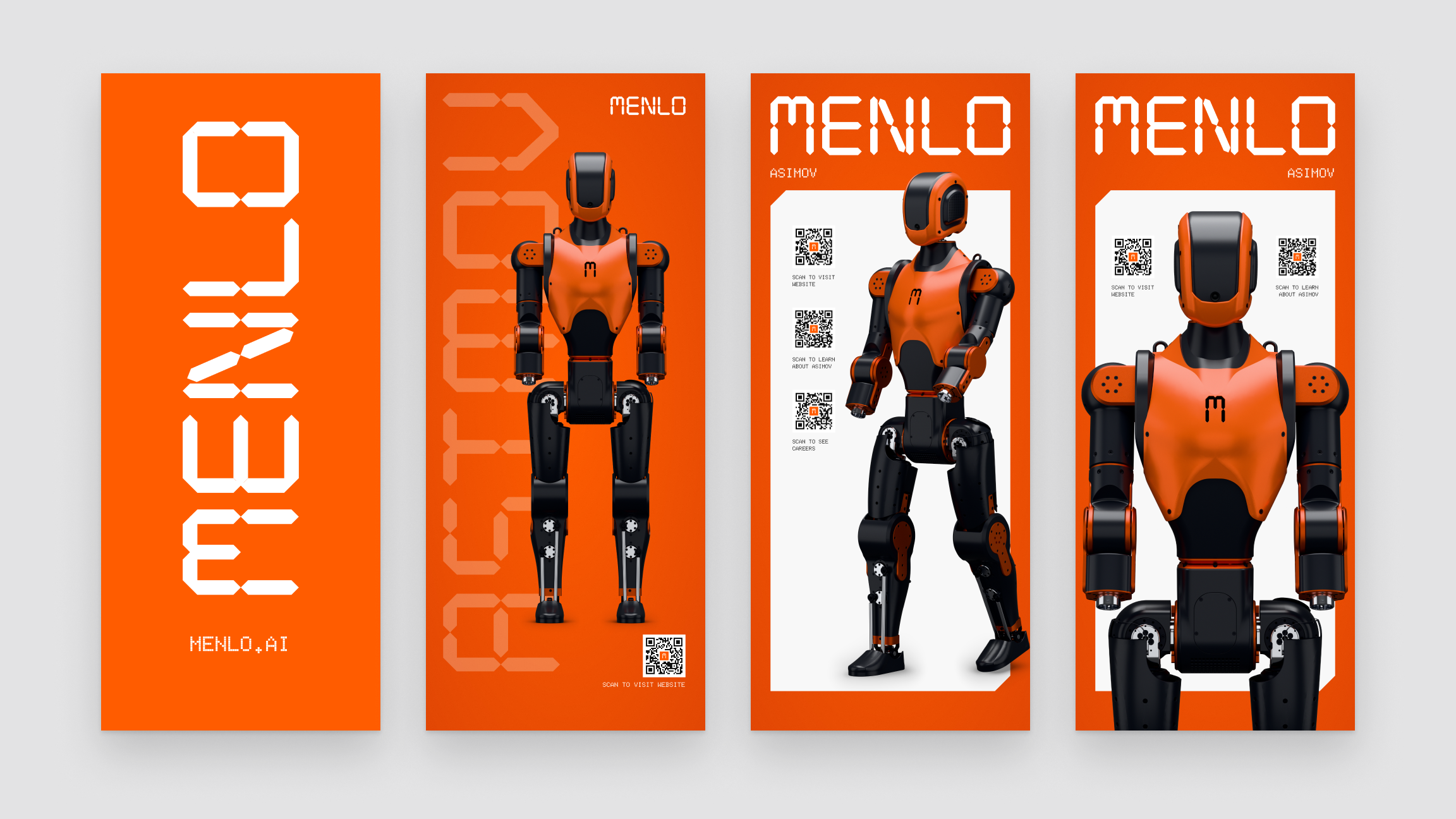
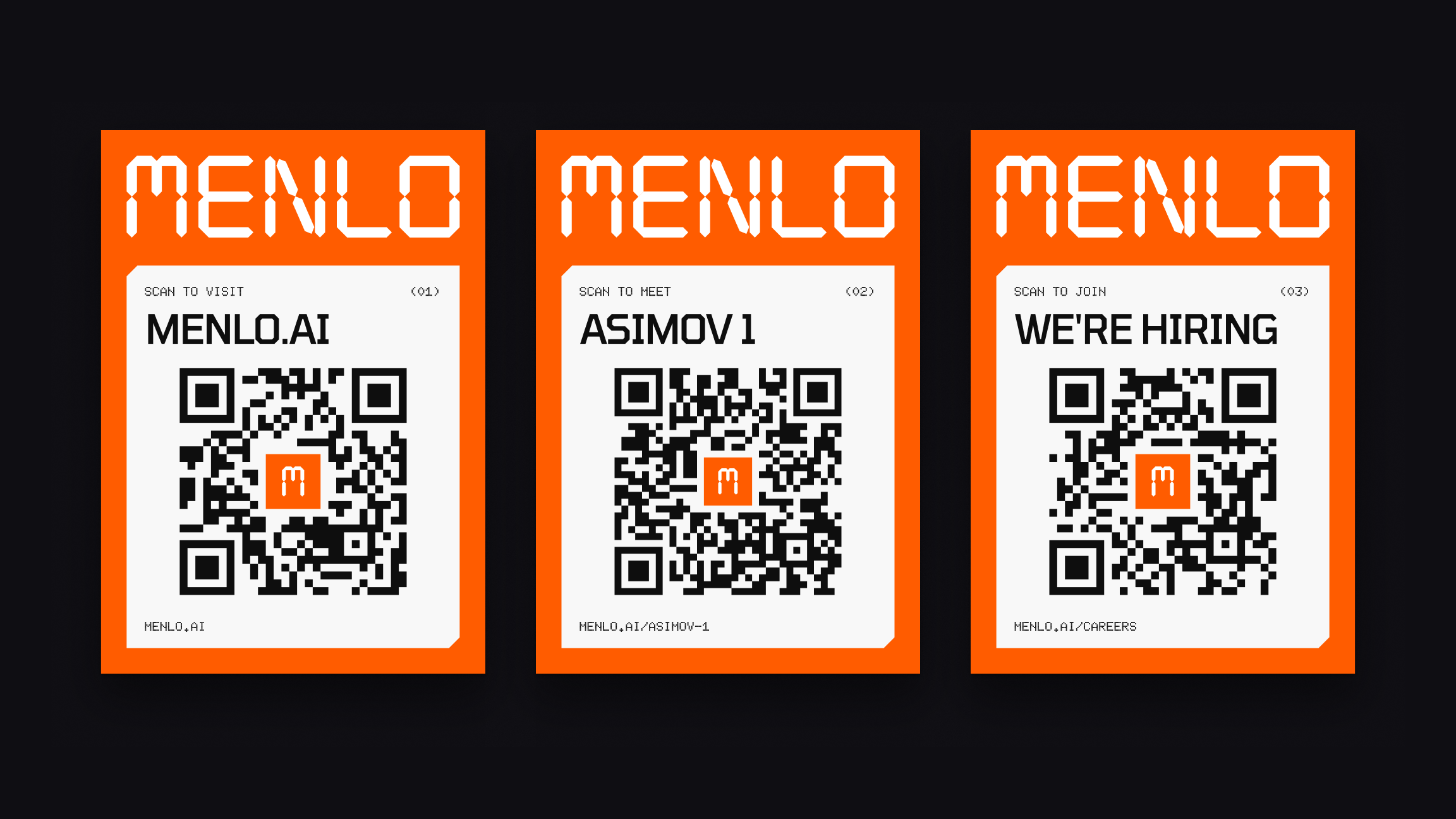
Asimov, Menlo’s open humanoid, has to work for a researcher deciding whether to build on it, a procurement officer approving the purchase, a journalist writing about it and an investor backing it. I wrote one product story and cut it into a brochure in eight-, four- and two-page versions, a press kit, investor and partner decks, and posters for the robot’s public appearances, all illustrated from a visual library I built from the robot’s CAD files.
Rethinking how people buy a robot
Sales used to run on email, with quotes, invoices and payments chased one by one. Before the shop existed, we tried asking for the full $20,000 up front for a week, and sales all but stopped: for many people that’s the price of a car, and institutions can’t spend it without going through procurement.
That experiment shaped the shop. I built it around a $499 deposit to reserve a robot, with the balance by invoice, and launched it as a pilot with just the DIY kit to test the purchasing flow. I designed the theme and took it to production with Claude Code, and spent more time than I’d like to admit getting sales, operations and finance to agree on how a deposit works.
Thirty-odd livestream episodes, one modular identity
Community Talk is Menlo’s weekly livestream, where engineers and researchers walk the community through what they’re building. I gave it a modular identity, because tinkering runs through everything Menlo makes: every episode is built from the same kit of a dot grid, icons and six colours, which stretches to the countdown intro, outro and video-call backgrounds. It has become a shared ritual for both the team and the community.
Next: menlo website & handbook